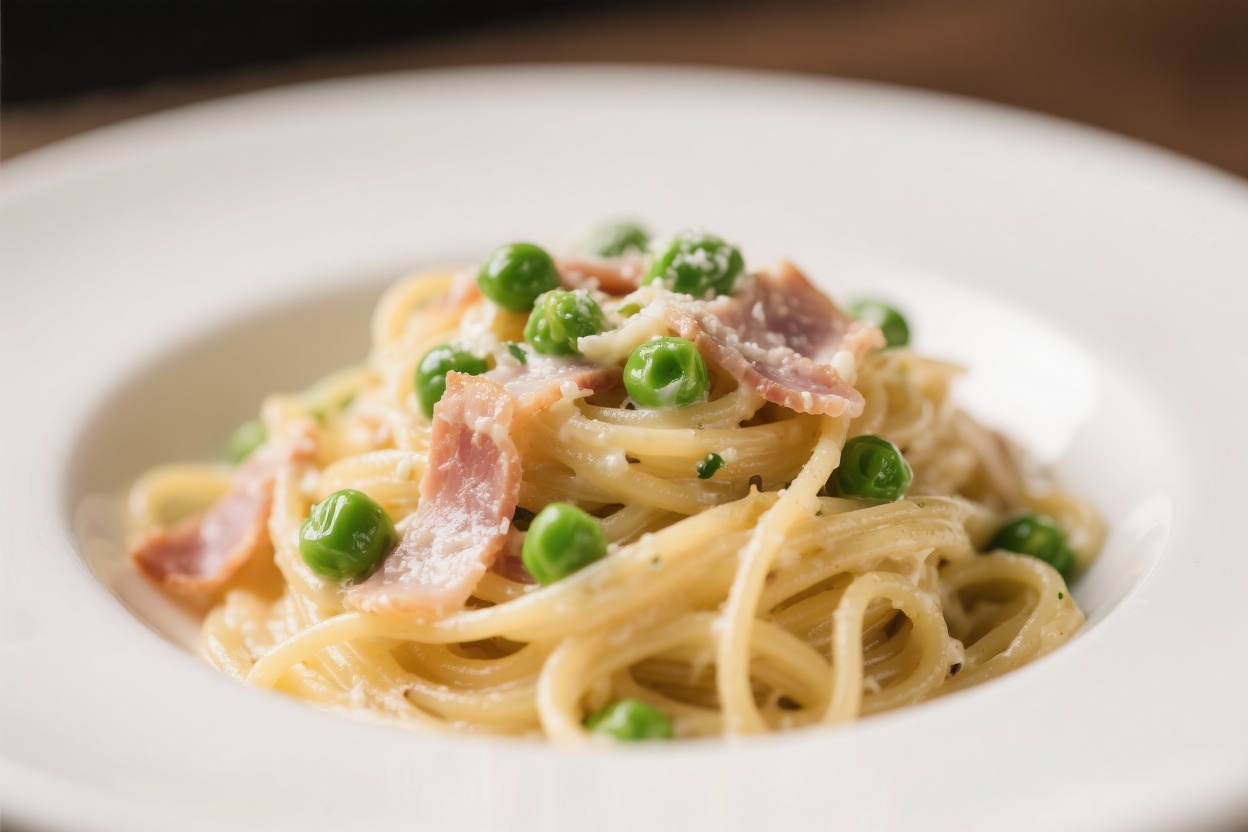
Spaghetti Carbonara With Peas – Creamy, Comforting, and Weeknight-Friendly
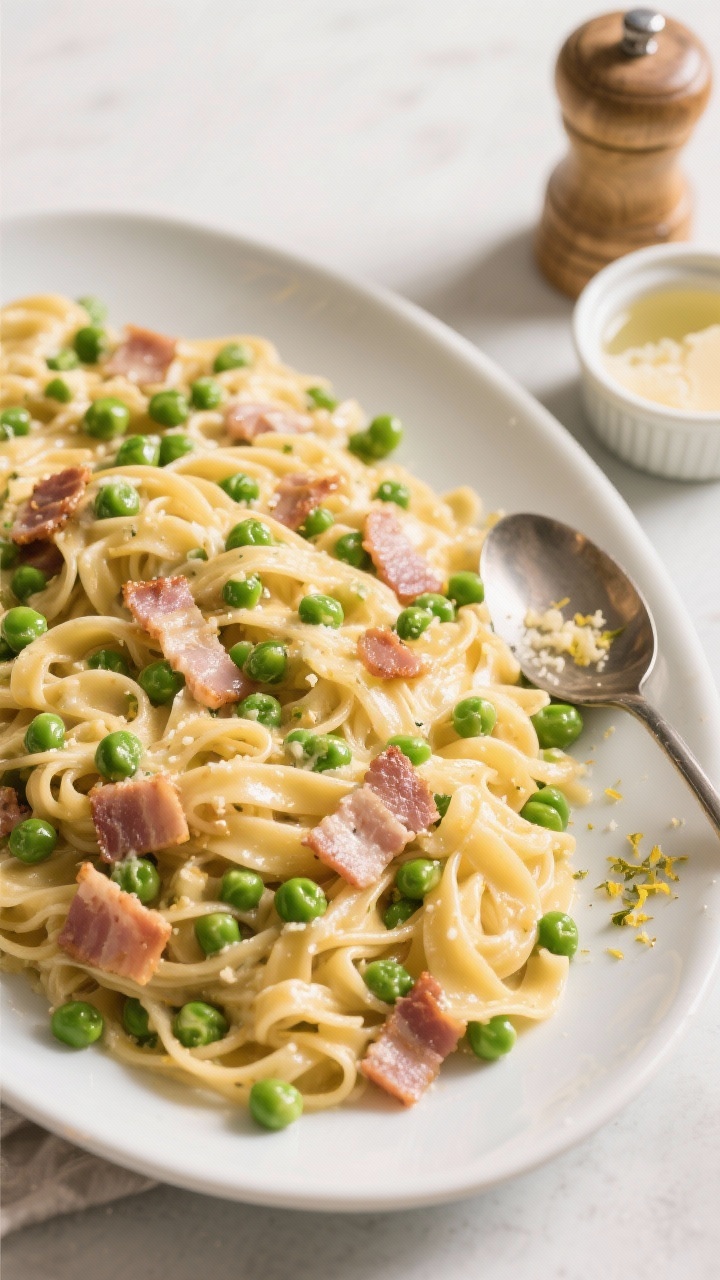
Carbonara is one of those meals that feels fancy but takes less time than a trip to the store. This version keeps the spirit of the classic while adding sweet peas for color, freshness, and a little extra bite. It’s creamy without cream, rich but not heavy, and ready in about 25 minutes.
If you’re craving a cozy bowl of pasta that still tastes bright and lively, this is your recipe. It’s perfect for date night, family dinner, or anytime you want big flavor with minimal effort.
What Makes This Special
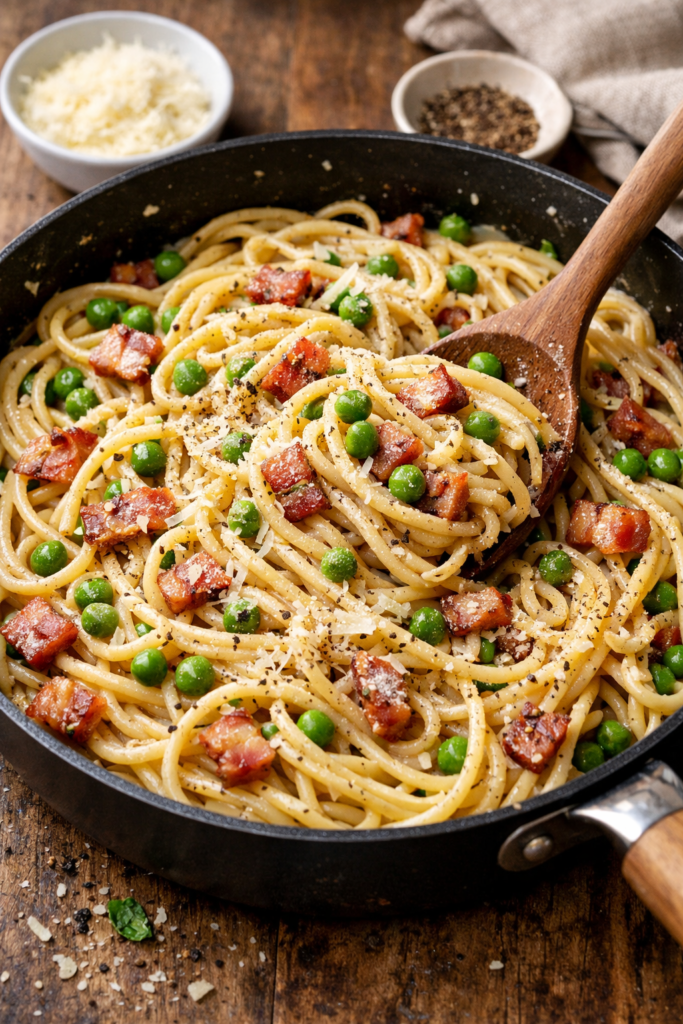
This carbonara keeps things simple, relying on eggs, cheese, and starchy pasta water for that silky sauce. The peas bring gentle sweetness that balances the salty pancetta and sharp Pecorino Romano.
You get a beautiful contrast: tender noodles, crisp bites of cured pork, and pops of sweet peas. Best of all, it hits the table fast, making it ideal for a weeknight meal that still feels special.
Shopping List
- Spaghetti (12 ounces)
- Pancetta or guanciale (4–6 ounces), diced; thick-cut bacon works in a pinch
- Eggs (2 large) and egg yolks (2), room temperature
- Pecorino Romano (1 cup finely grated); you can mix with Parmesan if preferred
- Frozen peas (1 cup), no need to thaw
- Garlic (1 clove), optional, lightly smashed
- Black pepper, freshly ground
- Kosher salt, for the pasta water
- Olive oil (1 teaspoon), optional if pancetta is very lean
How to Make It
- Bring a large pot of salted water to a boil. Salt it generously so it tastes like the sea. This is your main seasoning for the pasta.
- Prep the sauce base. In a large bowl, whisk together the eggs, egg yolks, and grated Pecorino Romano.
Add a generous amount of freshly ground black pepper. Set the bowl near the stove; you’ll toss the pasta in it.
- Crisp the pancetta. In a wide skillet over medium heat, cook the pancetta (and the smashed garlic clove, if using) until the fat renders and the meat turns golden and crisp, about 5–7 minutes. If the pan looks dry, add a teaspoon of olive oil.
Remove the garlic and discard.
- Cook the spaghetti. Add the spaghetti to the boiling water and cook until just shy of al dente. Reserve about 1½ cups of the pasta water before draining.
- Add the peas to the pancetta. Stir the frozen peas into the pancetta pan and cook for 1–2 minutes, just until heated through and bright green. Reduce the heat to low.
- Combine pasta and pancetta. Transfer the drained spaghetti to the skillet with the pancetta and peas.
Toss to coat in the rendered fat. Turn off the heat to avoid scrambling the eggs in the next step.
- Create the sauce. Pour the egg-cheese mixture over the hot pasta, tossing vigorously with tongs. Add a splash of hot pasta water and keep tossing until the sauce turns glossy and clings to the noodles.
Add more pasta water a little at a time until it’s silky and loose but not runny.
- Adjust seasoning. Taste and add more pepper and cheese as needed. Salt carefully—pancetta and pecorino are already quite salty.
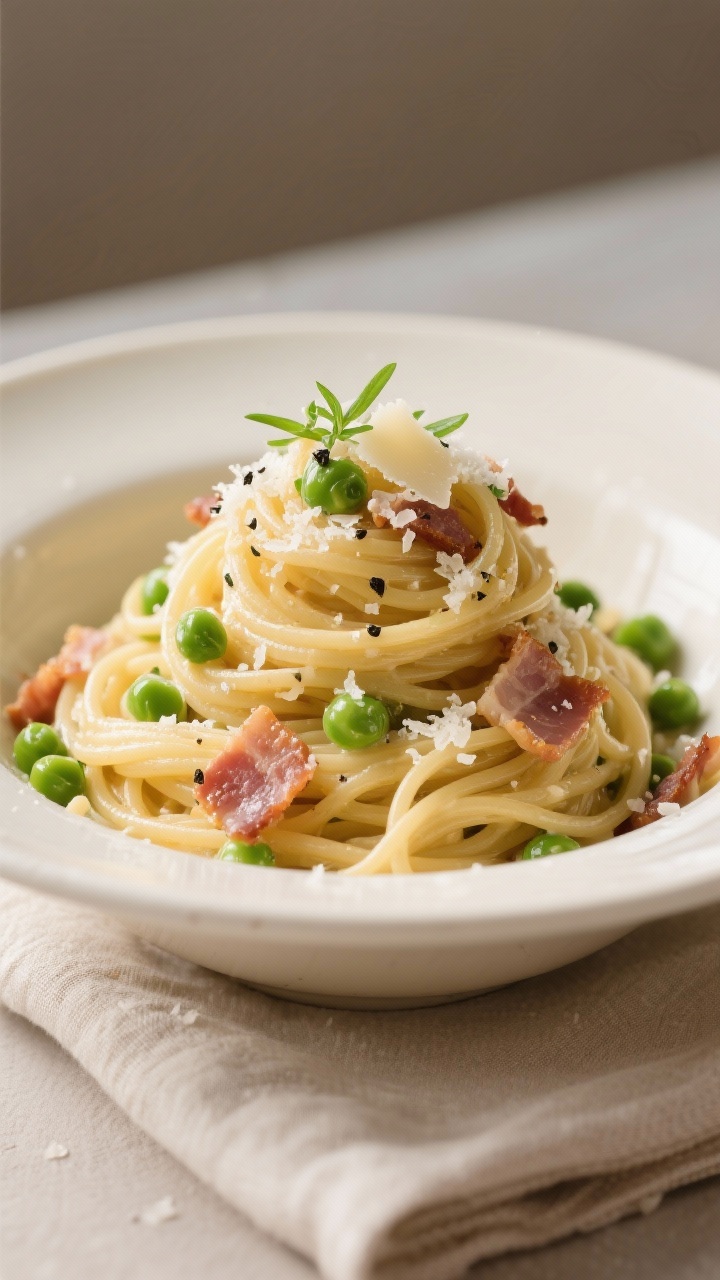
- Serve immediately. Carbonara is best hot off the stove. Finish with an extra dusting of Pecorino and a few cracks of black pepper.
Storage Instructions
Carbonara is at its best right after cooking.
The sauce can tighten and lose its silkiness as it sits. If you have leftovers, store them in an airtight container in the fridge for up to 2 days. Reheat gently in a skillet over low heat with a splash of water to loosen the sauce.
Avoid microwaving if possible, as it can overcook the eggs and make the pasta rubbery.
Benefits of This Recipe
- Fast and satisfying: From start to finish, you’re looking at about 25 minutes.
- No cream needed: The creamy texture comes from eggs, cheese, and pasta water, not heavy cream.
- Balanced flavors: Salty, savory pancetta pairs perfectly with sweet peas and sharp cheese.
- Simple ingredients: Most items are pantry or freezer staples, so it’s easy to pull together.
- Great for beginners: The steps are straightforward, and you’ll learn useful pasta techniques like emulsifying a sauce with pasta water.
Pitfalls to Watch Out For
- Scrambled eggs: If the pan is too hot when you add the egg mixture, the sauce can curdle. Turn off the heat and toss quickly, adding pasta water to moderate the temperature.
- Underseasoned water: The pasta water should be well salted; otherwise, the whole dish tastes flat.
- Skipping the pasta water: That starchy liquid is key to the glossy, creamy sauce. Reserve more than you think you need.
- Overcooked pasta: Go just shy of al dente so it finishes in the pan and absorbs flavor without turning mushy.
- Too much grease: If your pancetta renders lots of fat, spoon off a little before adding the pasta.
You want richness, not oiliness.
Recipe Variations
- Parmesan blend: Use half Pecorino Romano and half Parmesan for a milder, nuttier flavor.
- Bacon swap: Thick-cut bacon works if pancetta or guanciale isn’t available. Smoked bacon adds a different, but tasty, character.
- Lemon zest: A little grated lemon zest stirred in at the end brightens the dish without overpowering it.
- Herb lift: Finish with chopped parsley or chives for color and freshness.
- Extra veg: Add sautéed mushrooms or asparagus tips, cooked briefly so they stay tender-crisp.
- Gluten-free: Use your favorite gluten-free spaghetti and keep an eye on cook time; some brands soften quickly.
- Spicy kick: A pinch of red pepper flakes added to the pancetta gives subtle heat.
FAQ
Is carbonara supposed to have cream?
No. Traditional carbonara gets its creaminess from eggs, cheese, and starchy pasta water.
This method gives you a rich, silky sauce without heavy cream.
Can I use fresh peas instead of frozen?
Yes. Blanch fresh peas in salted boiling water for 1–2 minutes until bright green, then add them to the pan with the pancetta. Frozen peas are convenient and work just as well for most home cooks.
What if I only have whole eggs?
You can use three whole eggs instead of two eggs plus two yolks.
The sauce may be slightly less rich, but it will still be creamy and delicious.
How do I prevent the eggs from scrambling?
Turn off the heat before adding the egg mixture, and toss the pasta quickly. Add hot pasta water in small splashes to thin and cool the sauce as it emulsifies. Keep the pasta moving until glossy and smooth.
Can I make this ahead?
Carbonara is best made and served immediately.
If you need to prep, you can whisk the egg-cheese mixture ahead and keep it in the fridge for a few hours. Let it return to room temperature before using.
What’s the best cheese to use?
Pecorino Romano is classic for its salty, tangy punch. Parmesan can be used on its own or blended with Pecorino for a softer flavor profile.
Do I need to temper the eggs?
Not exactly, but you’re essentially doing it in the pan by adding small amounts of hot pasta water while tossing.
That controlled heat helps create the creamy sauce without cooking the eggs into curds.
Can I use another pasta shape?
Yes. Spaghetti is traditional, but bucatini, linguine, or even rigatoni work well. Choose a shape that holds sauce and tosses easily.
Wrapping Up
Spaghetti Carbonara With Peas delivers everything you want in a comforting pasta: creamy texture, salty crunch, and a hint of sweetness.
It’s quick enough for a busy night but polished enough for company. Keep the heat low, save your pasta water, and let the eggs and cheese work their magic. With a handful of simple ingredients, you’ll have a bowl of pasta that feels both classic and fresh—no cream required.
Printable Recipe Card
Want just the essential recipe details without scrolling through the article? Get our printable recipe card with just the ingredients and instructions.