
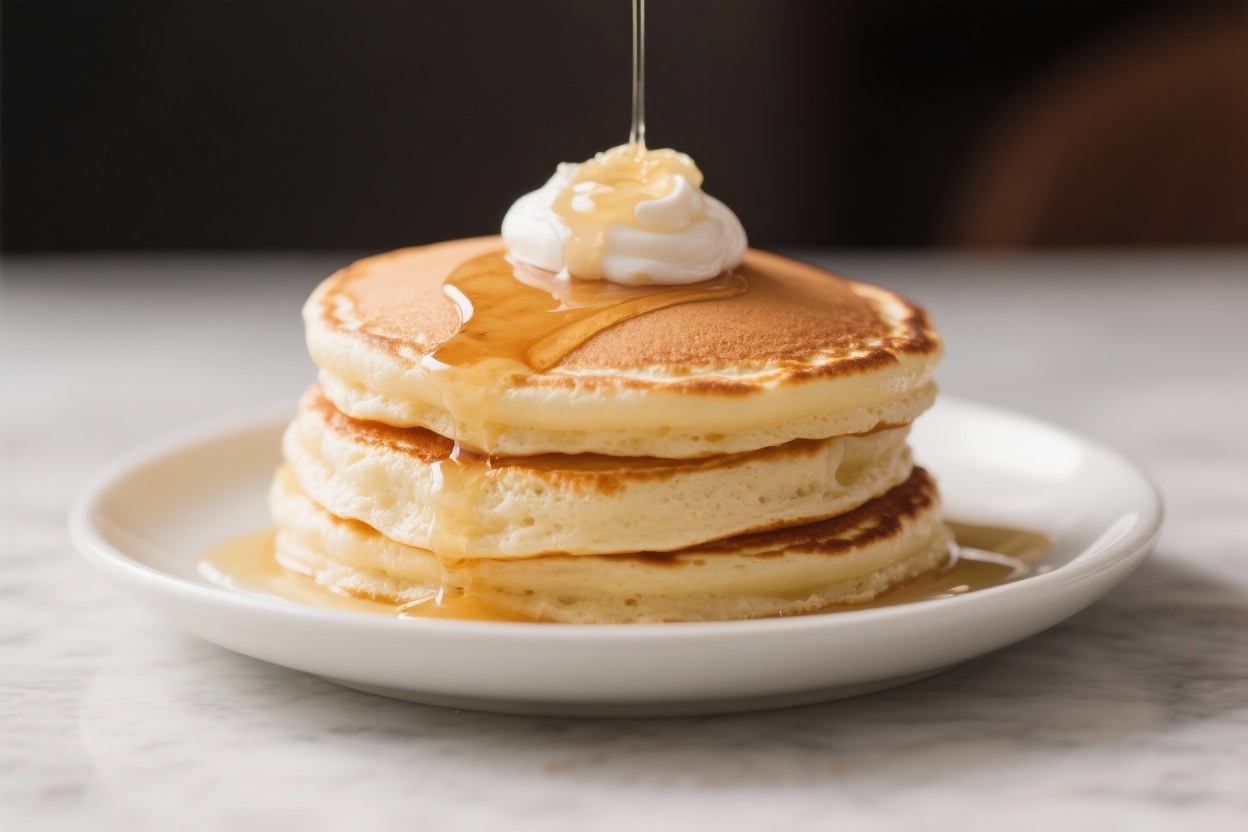
Fluffy Pancakes – Light, Tender, and Easy to Make
Pancakes should feel like a warm weekend hug—soft, airy, and just a little indulgent. These fluffy pancakes hit all the right notes with a tender crumb and buttery edges. They cook up golden, stack beautifully, and welcome any topping you love.
You don’t need special equipment, just a few pantry staples and a gentle hand. If you’ve struggled with flat, dense pancakes, this method will change your mornings.
What Makes This Recipe So Good
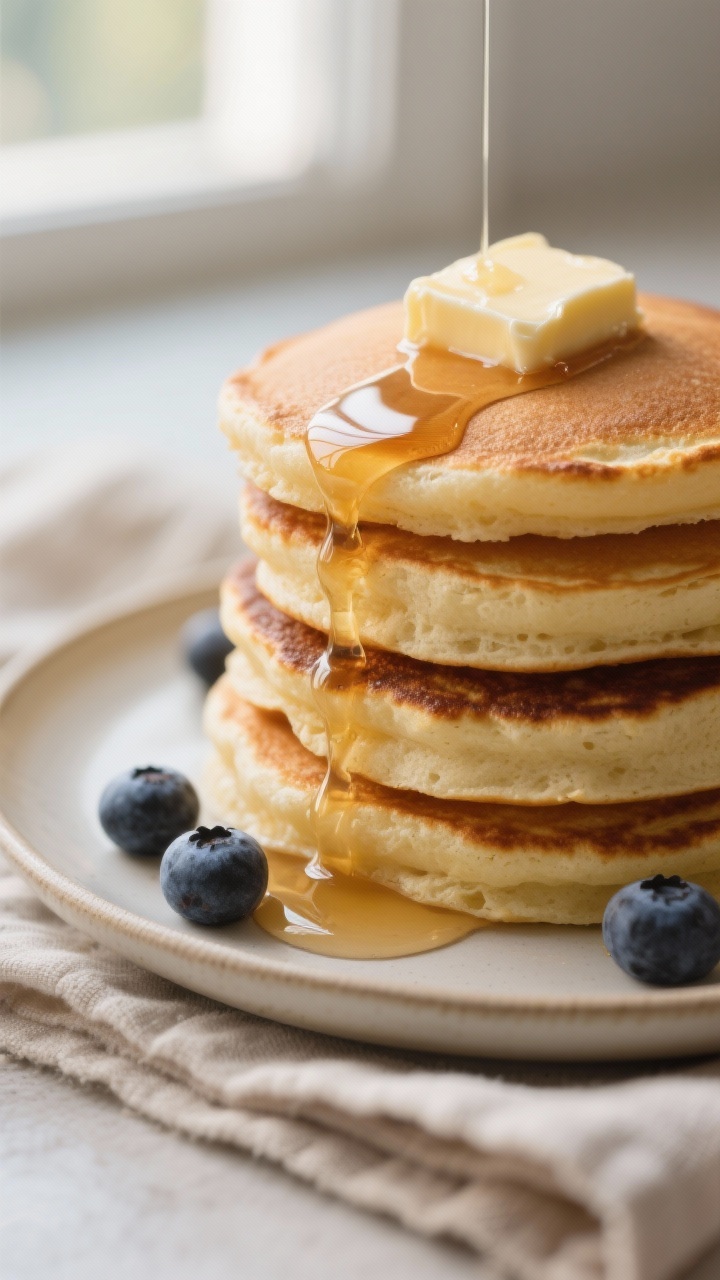
- Lofty rise: A balanced mix of baking powder and baking soda gives these pancakes a high lift without a chemical taste.
- Buttermilk magic: The acidity helps create a light, tender texture and a subtle tang that keeps pancakes from tasting bland.
- Foolproof technique: Minimal stirring and a short batter rest set you up for perfectly fluffy results.
- Flexible and forgiving: Works with regular milk plus lemon juice in a pinch, and the batter stands up well to add-ins.
- Golden and crisp edges: A little butter on a preheated griddle creates that irresistible browned ring.
Shopping List
- All-purpose flour
- Granulated sugar
- Baking powder
- Baking soda
- Fine salt
- Buttermilk (or milk plus lemon juice/vinegar)
- Large eggs
- Unsalted butter (melted), plus extra for the pan
- Vanilla extract
- Neutral oil or nonstick spray (optional, for cooking)
- Toppings: maple syrup, fresh berries, bananas, whipped cream, or yogurt
How to Make It
- Measure the dry ingredients: In a large bowl, whisk 2 cups all-purpose flour, 2 tablespoons sugar, 2 teaspoons baking powder, 1/2 teaspoon baking soda, and 3/4 teaspoon salt until well combined. Whisking helps distribute leaveners evenly.
- Mix the wet ingredients: In a separate bowl, whisk 2 cups buttermilk, 2 large eggs, 3 tablespoons melted butter (slightly cooled), and 1 teaspoon vanilla.
The butter should be warm, not hot, so it doesn’t scramble the eggs.
- Bring it together gently: Pour the wet ingredients into the dry. Stir with a spatula until just combined. A few small lumps are fine. Do not overmix—that’s the fastest way to tough pancakes.
- Let the batter rest: Set the bowl aside for 5–10 minutes.
This allows the flour to hydrate and the leaveners to activate. The batter will thicken slightly.
- Preheat the griddle: Heat a nonstick skillet or griddle over medium to medium-low heat. Lightly grease with butter or a blend of butter and oil.
The surface is ready when a drop of water skitters across.
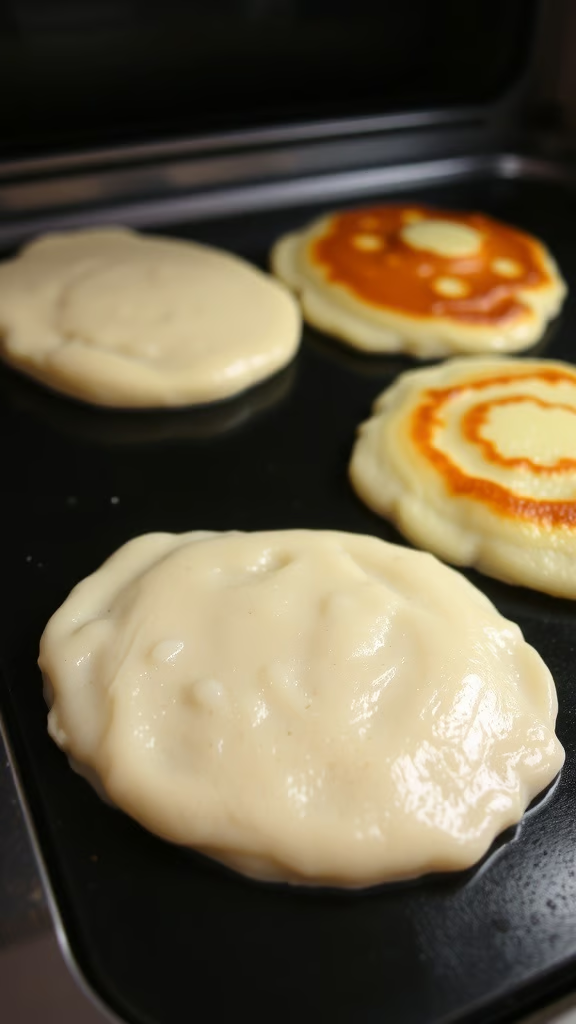
- Scoop and cook: Use a 1/4-cup measure for evenly sized pancakes. Pour onto the hot surface, spacing them apart. When bubbles form on top and the edges look set—about 2–3 minutes—flip carefully.
- Finish the other side: Cook 1–2 minutes more, until golden brown and springy to the touch.
Adjust heat as needed to keep pancakes from browning too fast.
- Serve warm: Transfer to a low oven (200°F/95°C) to keep warm while you finish the batch. Stack them high and serve with butter and maple syrup or your favorite toppings.
Keeping It Fresh
- Short-term: Store leftover pancakes in an airtight container in the fridge for up to 3 days. Separate layers with parchment to prevent sticking.
- Freeze for later: Freeze in a single layer on a sheet pan, then transfer to a freezer bag for up to 2 months.
This keeps them from clumping together.
- Reheat right: Toast on low in a toaster or warm in a 300°F (150°C) oven for 8–10 minutes. For a quick fix, microwave in 15–20 second bursts, but the toaster gives better texture.
- Batter storage: Pancake batter is best used right away. If needed, refrigerate for up to 24 hours and add a splash of buttermilk to loosen before cooking.
Why This is Good for You
- Balanced energy: The mix of carbs, fat, and protein gives steady energy, especially when paired with a side of eggs or Greek yogurt.
- Customizable nutrition: Use whole milk for richness or low-fat buttermilk to lighten it up.
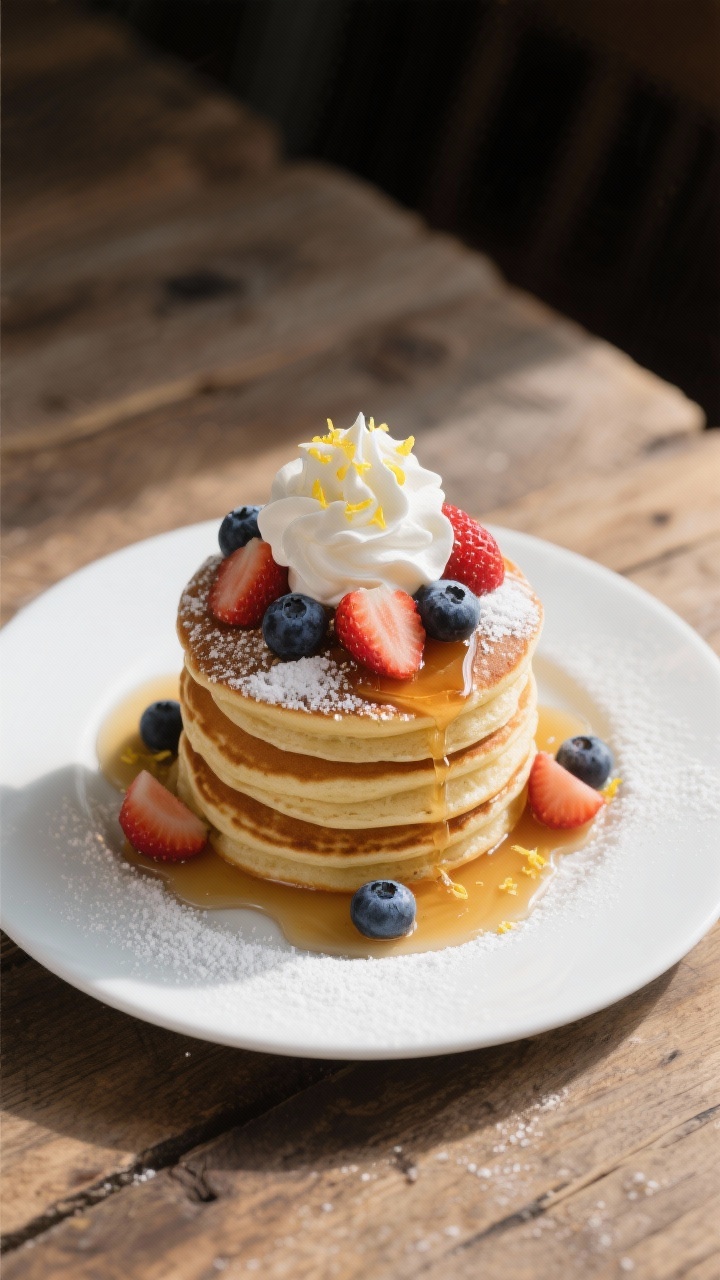
Add berries or bananas for fiber and natural sweetness.
- Better ingredients control: Homemade pancakes let you manage sugar and salt, and skip unnecessary additives.
- Satiety factor: The fluffy texture and slight tang make a small stack satisfying, so you’re less likely to overdo it.
Pitfalls to Watch Out For
- Overmixing the batter: Stirring until perfectly smooth develops gluten and makes pancakes dense. Lumps are your friend.
- Too-hot pan: If the exterior browns before the center cooks, lower the heat. Consistent medium heat is key.
- Skipping the rest: Resting helps the batter thicken and rise better.
Don’t rush it.
- Old leaveners: Baking powder and soda lose potency over time. If your pancakes stay flat, check their freshness.
- Wrong measuring technique: Scoop flour with a spoon into the cup and level it. Packing flour leads to heavy pancakes.
Variations You Can Try
- Blueberry Lemon: Fold 1 cup fresh blueberries into the batter and add 1 teaspoon lemon zest.
Cook gently to avoid bursting the berries too aggressively.
- Chocolate Chip: Stir in 3/4 cup mini chocolate chips. A sprinkle on top before flipping keeps them from sinking and scorching.
- Whole Wheat Boost: Swap half the all-purpose flour for white whole wheat. Add an extra tablespoon of buttermilk to keep the batter supple.
- Cinnamon Swirl: Mix 2 tablespoons brown sugar with 1 teaspoon cinnamon.
Sprinkle a little over each pancake right after pouring the batter.
- Banana Nut: Mash 1 ripe banana into the wet ingredients and fold in 1/3 cup chopped pecans or walnuts. Cook on slightly lower heat to prevent over-browning.
- Gluten-Free: Use a good 1:1 gluten-free flour blend with xanthan gum. Let the batter rest on the longer side to hydrate fully.
- Dairy-Free: Swap buttermilk for almond or oat milk mixed with 2 teaspoons lemon juice.
Use melted coconut oil instead of butter.
FAQ
Can I make the batter ahead of time?
Yes, but fresh batter rises best. If you make it ahead, store it covered in the fridge for up to 24 hours. Stir gently and add a splash of buttermilk or milk if it thickens too much.
What if I don’t have buttermilk?
Use 2 cups milk with 2 tablespoons lemon juice or white vinegar.
Stir and let sit for 5 minutes. It won’t be identical, but it’ll get you very close in flavor and texture.
How do I keep pancakes warm for a crowd?
Place cooked pancakes on a baking sheet in a 200°F (95°C) oven. Don’t stack too tightly or they’ll steam and lose their crisp edges.
Serve within 30–40 minutes.
Why are my pancakes gummy in the middle?
The heat is likely too high or you flipped too soon. Wait for steady bubbles across the surface and dry-looking edges before flipping, then cook a minute or two more on the second side.
Can I use oil instead of butter?
Yes. Use 3 tablespoons neutral oil in the batter and a light film of oil on the pan.
Butter adds flavor, but oil gives a slightly cleaner browning and is less likely to burn.
How do I get perfectly round pancakes?
Use a 1/4-cup measure and pour from the center, letting the batter spread naturally. If needed, gently nudge the edges with the back of the cup right after pouring.
In Conclusion
Fluffy pancakes aren’t complicated—they just need fresh leaveners, a light hand, and a little patience. This simple method delivers tall, tender stacks with golden edges and a soft, custardy interior.
Keep the heat moderate, let the batter rest, and don’t chase perfection in the bowl. Once they hit the plate, they’ll taste like a cozy, home-cooked morning. Add your favorite toppings, pour the syrup, and enjoy every bite.
