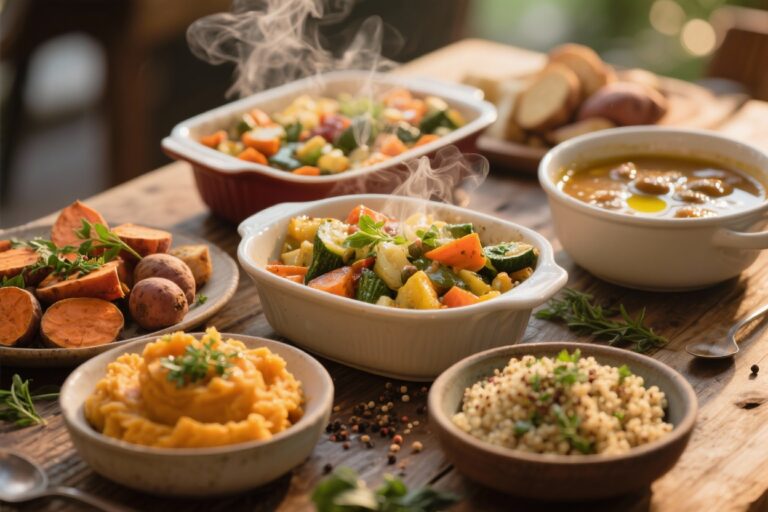

Autumn Squash Soup – Cozy, Creamy, and Comforting
Autumn squash soup is the kind of bowl that makes chilly evenings feel warm again. It’s velvety, a little sweet, and layered with savory depth. You get the natural richness of roasted squash, a hint of spice, and a silky finish that feels special without being fussy.
This is the soup you’ll want for weeknights, dinner parties, and everything in between. It’s simple to make, easy to love, and somehow tastes even better the next day.
What Makes This Recipe So Good

- Roasted flavor: Roasting the squash and aromatics brings out deep caramelized sweetness you just can’t get from boiling.
- Balanced and bright: A splash of apple cider or lemon adds lift, so the soup doesn’t taste heavy.
- Silky texture: Blending with a little cream or coconut milk makes it plush and restaurant-worthy.
- Flexible and forgiving: Use any winter squash you like—butternut, kabocha, acorn—and it still turns out great.
- Make-ahead friendly: It stores and reheats beautifully, which makes it perfect for meal prep.
Shopping List
- Winter squash (about 3 to 3.5 pounds total): butternut, kabocha, or a mix
- Yellow onion (1 large), roughly chopped
- Carrots (2 medium), peeled and chopped
- Garlic (3–4 cloves), peeled
- Apple (1 medium, like Honeycrisp or Gala), peeled and chopped (optional, for natural sweetness)
- Olive oil (3–4 tablespoons)
- Salt and black pepper
- Ground cinnamon (a pinch) and ground nutmeg (a pinch)
- Smoked paprika (1/2 teaspoon, optional for warmth)
- Fresh thyme (a few sprigs) or dried thyme (1/2 teaspoon)
- Vegetable or chicken stock (4–5 cups)
- Apple cider or lemon juice (1–2 tablespoons, for brightness)
- Heavy cream or coconut milk (1/2 to 3/4 cup)
- Butter (1 tablespoon, optional for richness)
- Maple syrup (1–2 teaspoons, optional if you want a touch more sweetness)
- Pepitas, croutons, or Greek yogurt for topping (optional)
How to Make It
- Prep the squash: Heat your oven to 425°F (220°C). Peel the squash if using butternut; for kabocha, you can leave the skin on if it’s thin.
Seed and cube into 1-inch pieces.
- Roast for flavor: Spread squash, onion, carrots, garlic, and apple on a sheet pan. Toss with olive oil, salt, pepper, smoked paprika, and thyme. Roast 30–40 minutes, stirring once, until edges are caramelized and tender.
- Deglaze the pan: Pour a splash of stock onto the hot sheet pan and scrape up the browned bits with a spatula.
Those bits add big flavor—don’t skip this step.
- Simmer: Transfer the roasted vegetables and pan juices to a pot. Add 4 cups of stock. Bring to a simmer for 5–10 minutes to meld flavors.
- Blend: Use an immersion blender to purée until smooth.
If using a countertop blender, work in batches and vent the lid slightly to let steam escape.
- Adjust texture: If it’s too thick, add more stock to thin. You’re aiming for a pourable, velvety consistency.
- Finish: Stir in cream or coconut milk, a small knob of butter, and apple cider or lemon juice. Add a pinch of cinnamon and nutmeg.
Taste, then season with more salt and pepper if needed. If you like it sweeter, add a teaspoon of maple syrup.
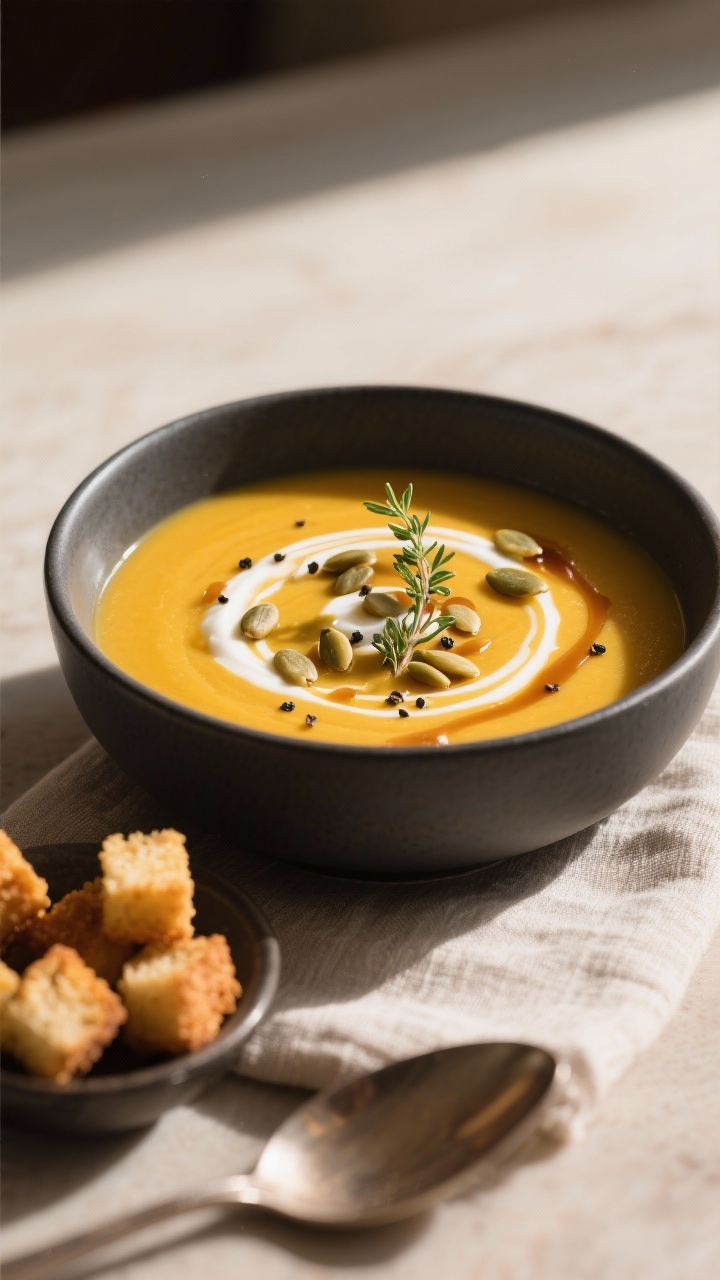
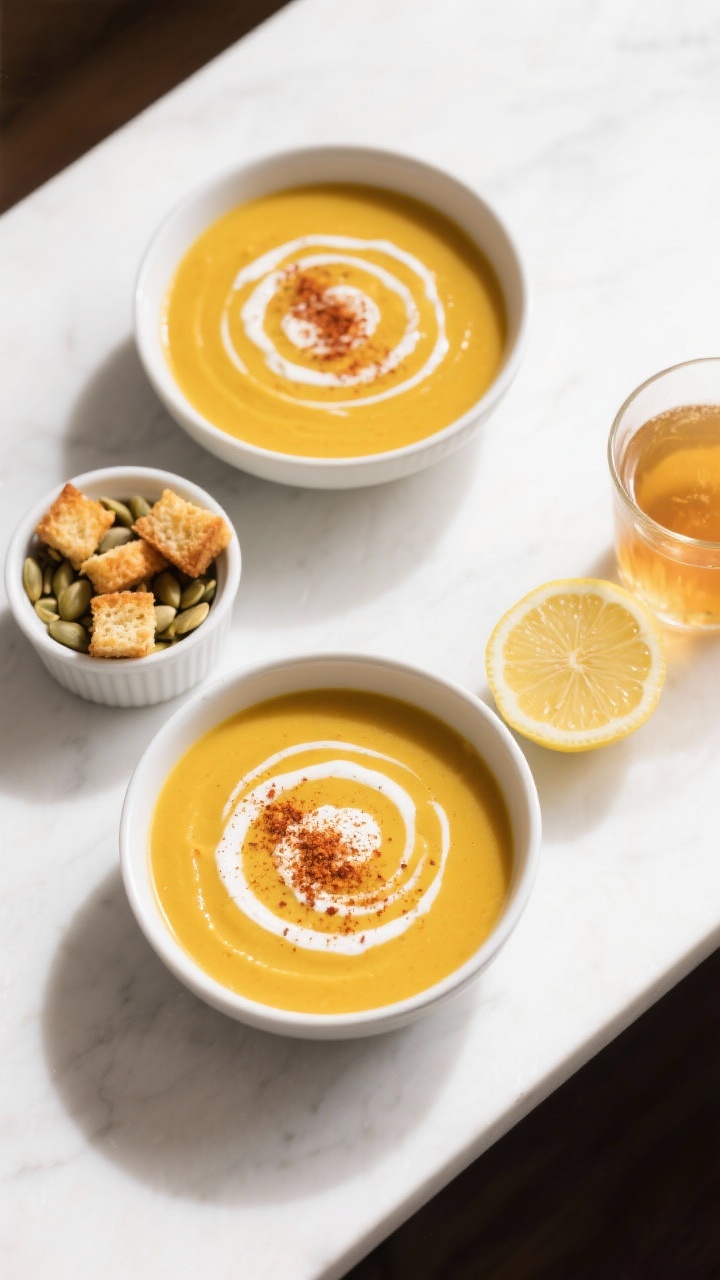
- Serve: Ladle into warm bowls. Top with toasted pepitas, a swirl of yogurt, or crunchy croutons for contrast.
How to Store
- Fridge: Cool completely, then store in an airtight container for up to 5 days.
- Freezer: Freeze in portions for up to 3 months.
Leave a little headspace in containers to allow for expansion.
- Reheat: Warm gently on the stove over low heat, adding a splash of stock or water if it thickens too much. Avoid boiling after adding cream.
Why This is Good for You
- Rich in vitamins: Squash is loaded with vitamin A and C, which support vision and immunity.
- Fiber-filled: The squash, carrots, and apple offer fiber that keeps you satisfied and supports digestion.
- Healthy fats: Olive oil and optional coconut milk add fats that help absorb fat-soluble vitamins.
- Lower sodium control: Making it at home means you choose the salt level and stock quality.
What Not to Do
- Don’t skip roasting: Boiling alone can make the flavor flat. Roasting builds depth and sweetness.
- Don’t rush the blend: Under-blending leaves it grainy.
Blend until completely smooth.
- Don’t forget acid: A little cider or lemon keeps it lively. Without it, the soup can taste dull.
- Don’t overdo the spices: Cinnamon and nutmeg should whisper, not shout. Start small and taste.
- Don’t add cream too early: Add at the end to prevent curdling or separation.
Variations You Can Try
- Curried squash soup: Swap the cinnamon and nutmeg for 1–2 teaspoons of curry powder and a pinch of cayenne.
Finish with coconut milk and lime.
- Sage and brown butter: Brown 2 tablespoons of butter with fresh sage leaves until nutty. Stir into the soup for a toasty, herby finish.
- Roasted red pepper twist: Blend in one roasted red pepper for a smoky, slightly tangy note.
- Protein boost: Add cooked red lentils (about 1/2 cup dry cooked separately) before blending for extra body and protein.
- Apple-forward: Use two apples and a touch more cinnamon for a sweeter, harvest-style version.
- Spicy chipotle: Blend in 1 teaspoon chipotle in adobo for heat and smoke. A dollop of yogurt on top cools it down.
FAQ
What’s the best squash to use?
Butternut is the easiest to find and gives a reliably smooth texture.
Kabocha adds a rich, chestnut-like flavor. Acorn works too, though it’s a bit less sweet. A mix gives you the best of all worlds.
Can I make it dairy-free?
Yes.
Use olive oil and coconut milk instead of butter and cream. The result is just as silky, with a subtle coconut note that pairs well with warm spices.
Can I use pre-cut squash?
Absolutely. It saves time and roasts faster.
Just make sure the pieces are uniform so they cook evenly and caramelize instead of steaming.
How do I thicken a soup that’s too thin?
Simmer it uncovered for a few minutes to reduce, or add a few more roasted squash cubes if you reserved some. A small scoop of mashed potato can also help in a pinch.
What can I serve with it?
Crusty bread, grilled cheese, or a simple arugula salad with lemon and shaved Parmesan. For a heartier meal, add roasted chicken or a grain salad on the side.
Can I make it in a slow cooker?
Yes.
Sauté the onions and carrots first for flavor, then add everything (except cream and acid) to the slow cooker and cook on low for 6–8 hours. Blend and finish with cream and cider.
Wrapping Up
This autumn squash soup is simple, cozy, and adaptable. Roasting builds deep flavor, blending makes it lush, and a touch of acid keeps it bright.
Stock your fridge or freezer with a batch, and you’ve got an easy weeknight dinner or a comforting starter ready to go. Top it how you like, pair it with something crisp and crunchy, and enjoy the calm that comes with a warm bowl in your hands.